


My life is loops. Self-contained little loops, like the window my phone has a full battery, before I have to charge it again. Driving home from work for lunch and back to the office again. My attention span lasts barely long enough for the next video to load. Does that lack of focus mean that my writing is dead?
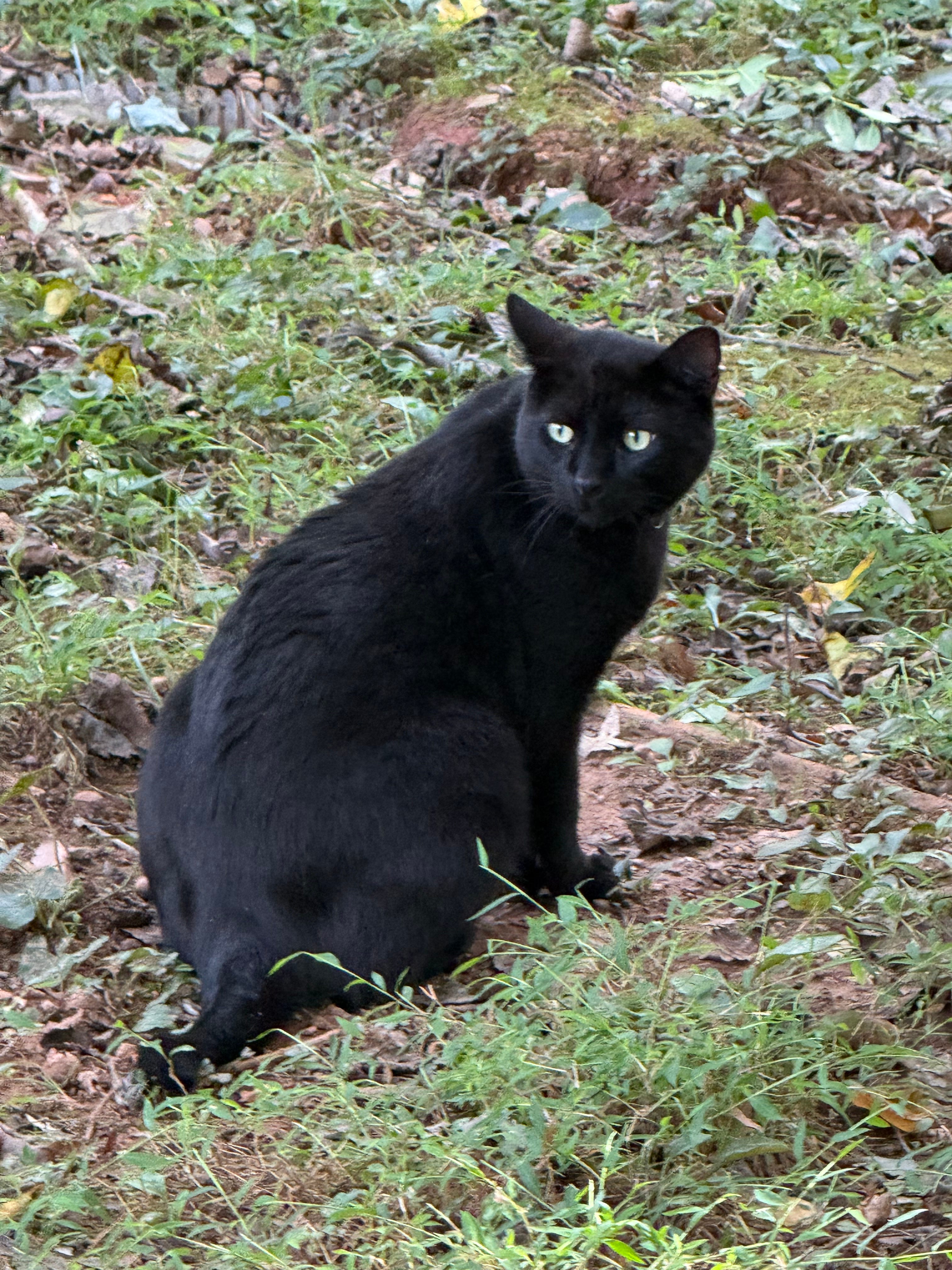
I’m a reluctant writer. I said what I said. I’m laying on my couch, tapping this into my phone as I listen to the electric heater built into my cheap efficiency apartment turn off and on. I cancelled my membership to the YMCA because I never go there; I am eating junk food and getting cheap fat this winter, wrapped under polyester blankets, in old Columbia fleeces as I hide from the cold and hibernate and listen to my upstairs neighbors vacuuming, which they always are doing because they own two cats they never let out of the house. If I had a cat, especially if I had two, I’d let them out of the house as much as they wanted; it feels weird to keep a cat cooped up in the house all day and the kind French-Canadian neighbor across the way lets his black cat named Buddy out all the time. Buddy has a handy cat door that’s always open when he wants to go outside. Buddy doesn’t come out in the cold. I don’t blame him and it makes me wonder if all cats are indoor cats in the winter, or if that’s a cat-by-cat thing. We have Buddy to thank for there being so few copperheads around my apartment complex; he hunts them. There used to be far more, said Alain, his owner, in his quebecois accent. But there aren’t anymore. That’s a good thing. I previously took little walks around the grounds of the complex and at times got pretty deep in the ivy that spreads everywhere on the North Carolina ground, in the forested parts at least. I’ve seen snakeskins and am glad that Buddy has dispatched them. It’s lowkey impressive that your average-sized house cat can take on a copperhead. Maybe he was able to get young ones. Or maybe Alain was lying.
I feel trapped by my attention span lately—locked into little engagement loops that never get me to where I need to go. Is the novel dead? My novel? Others? It feels like the novel as such is a dead medium. I can’t see it competing with the thrill and wonder of videos. Novels require attention spans that feel ridiculous to expect of people in this world. On LinkedIn I saw an article I didn’t bother to corroborate that talked about how Generation Z is the first generation scoring lower on IQ tests than their predecessors. Apparently previous generations did better on measures of intelligence, focus and problem solving than Gen Z. Just as the Millennials are the first generation not to do better than their parents economically, it seems that the fundamental skills of reasoning have not been bequeathed to those born after Millennials.
When I was younger, I always enjoyed reading. Now the latest book I read was The Last Duel by Eric Jager, a good but really short book about a medieval event, a judicial duel to the death between two feuding men in a France torn by the Hundred Years’ War. I saw the movie about it first. I liked the book but it’s very brief. At the same time, I’m finally trying to finish the Lord of the Rings, which I’m embarrassed to say I haven’t done yet. Still haven’t read it. I tried to when I was much younger, like eleven or twelve and I got caught up in the slow, desultory beginning of the novel. I understand I’m not the only one this has happened to, but it’s still something I need to finish, as, overall, it’s still a major inspiration for the book I’m currently writing, or attempting to write, Eathel the Bastard. I guess if I haven’t read it, it can’t be an inspiration. Maybe the movies are what’s really the inspiration for me. What is writing a novel? You need to be assiduous in returning to finish it, and ruthless and merciless in refining it. It doesn’t employ the same discipline that finishing a poem does. Poems are intense, but shorter. They allow you to briefly engage with a feeling and emotion and then let it go. They’re easy to finish. They’re tough sometimes, but you can still see them all at once on the page and understand what’s missing, usually by way of feeling what’s unfinished, or sensing that the poem itself is unfinished and then continuing to attack it and return to it until it feels like it’s something closer to done. You can sound out the poem in your head to see where the rhythm needs fixing. When I worked at my previous job, I seem to have been more prolific and published lots of poems online. They’re all at my website, and the latest ones are even dated. You can tell that the latest ones were all written from the security of my previous job; they are more efflorescent due to the calm that came from the stability of being employed. I miss that: having little to do, forgotten within the corporate structure I was a small part of, and free to go through my old diaries and notes and find things I thought were beautiful and transport them across my myriad devices by reading them into my Notes app on my phone, relying on the great transcription features built into the Apple software to reliably capture the words. Then I’d work on them from my phone and at home. I’d transfer them over and over from my work computer to my personal devices, revising them at each stage, until the editing seemed almost to happen automatically, by accident, as a side effect of all this shuffling around from platform to platform.
Sometimes I’d open up a text editor and simply write out what I thought during the long down time I had between the meetings I was supposed to go to or during the meetings themselves. Or, writing by hand, my doodles would turn into snippets of poems or text that I’d then elaborate on.
I have been thinking a lot lately about what would have happened had I been more serious about writing from an earlier age. I’ve posted on Substack Notes earlier about how I never wanted to be a writer, and that’s true. At some point I lost the joy of reading too, I think.
What makes writers writers and who’s a writer and how are writers defined in the societies I grew up in? One thing stands out—writers are usually sad and broke. The best ones aren’t even recognized as such until they’re dead. Herman Melville is a classic example. Today, kids read Moby Dick in school and it’s a great book, apparently. Like so many other books, I started it, but did not finish it. Anyway, Melville died in poverty as far as I know and without an iota of the renown that he now has. I wonder if he had any heirs or people that could even benefit from the legendary status of his work. Something tells me no.
I have nonetheless latched onto writing because I’ve always been told I’m good at it. It seems to be something that plays to my natural skillset of communication. But it also gives me something to own, a piece of capital in a world where wages are increasingly not any kind of path to prosperity. I did and do imagine wealth for myself, misguided, naive as that might be. I want to be free of all this working for other people, depending on them to pay my rent, put food on my table. I don’t so much care if I am always paying rent. I care more about whether I own the font of wealth. In America, I guess everywhere today, you can own the fountain or be downstream from the spring. I want my own well, my own thing, that I can rely on when other sources of prosperity are waning.
There was a time before the novel; will there be a time after it?
I think we’re already there but why do I want to do a novel? Why is that how I imagine my life going? Because I do imagine that. Some part of me has always suspected I would write several of them. I pattern my life so much on what I see others do, and a novel seems to be the most prevalent form of popular success for writers. But it engages none of the senses; therefore, does it engage with all of the senses, I wonder? I am wary of any form of media that takes up two or more senses—it’s easy to get wrapped up in them and seduced by them. Visual media can be, for example, a static work of art, like a photograph or painting or poster, so one sense. Movies and TV shows are visual but have audio in them too. Unless you’re watching silent movies, which no one is outside of film school. Something that engages too many of the senses, I don’t trust. We are too easily beguiled. Music engages one sense, hearing, so it’s relatively safe. What of audiobooks? Is that an example of something engaging beyond the no senses that writing may engage? I really don’t know whether it’s a thing that reading engages fewer senses, and whether engaging fewer senses is even a good thing or a bad thing.
Even though this winds around and doesn’t make too much of a point, I’m going to publish it anyway.
Sorry. I’m not much of a phone typist. Trying to say that I’m a fan of the wandering mind taking me on a jaunt of free association through language for no practical reason. Practicality or even “a point” be damned.
I love this new direction, Sam. Also Buddy sounds awesome 😸