


I wanted to at least publish something, if for no other reason than to establish that I still exist, am still writing, thinking and wondering about the future. Though I’ve recently started at a stable jon, I still want to pursue creative things full time, one day. Maybe that’s as a writer; maybe that’s as a content creator.1 Also, I keep coming back to this idea that the only way to truly get job security is to have some kind of audience that is interested in what you have to say. One that’s willing to stay with you. That kind of security is something I really want. Substack is, at present, my central vehicle for building that audience.
It is daylight savings time again. Something, I guess, about the clocks changing and me changing, me ongoing, in medias res, made me want to break the streak of not posting. I wanted to collect my thoughts into something longer, something compiled over time, instead of the write-and-post-the-same-day kind of energy I first brought to Substack.
What follows is not fantasy fiction, but personal updates about the past dozen months.
2025 passed in a variety of ways, and most of them were unpleasant. I’ve struggled with profound depression, with working at several jobs that didn’t last long and, currently, a lot of anxiety around beginning a new job. I think—I hope—the internal turmoil going to go away soon, but it has still been something formidable to contend with over the past few weeks. I am endlessly grateful to the company that hired me, and intend to do my best to succeed there. It’s just that it seems like some mental health issues are trying to lay me low, even from the relative security of a salaried position. What’s up with that?
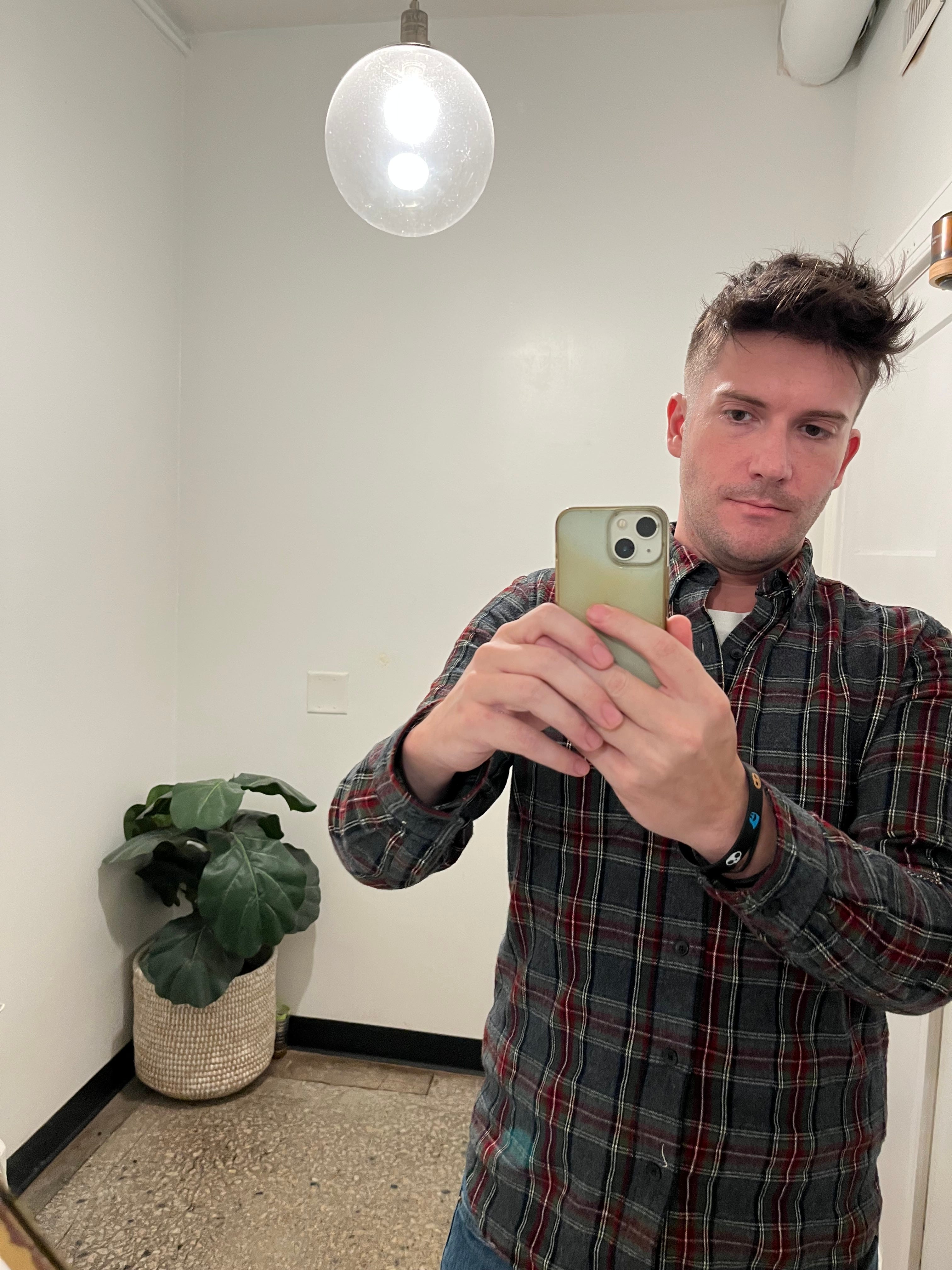
Withdrawing from social media
Today, March 15, I deleted, not deactivated, one of my Instagram accounts. Meta, the parent company of Instagram, Facebook and more, wants you to deactivate, not delete, your accounts. That is pretty telling, I think. There’s still an account out there I use for poetry and writing, and to keep up with a few friends I’ve made before and after my stint on social media, which you can find at samliebl_. I don’t really know what’s going to be there, but it will be more serious than my last one was, that rogue account that’s scheduled for deletion.
Besides pushing for deactivation over deletion, Meta doesn’t immediately delete things; they only schedule things for deletion. Meta says that my old account won’t appear in any searches between now and then. I wanted to delete that account because it represents a different time in my life. A time where I was going all in on social media, and I thought I was casting my lot in with the people living on the edges. I was going to be, if not an influencer, which I never wanted to be and something of which I do not think I am capable, at least influencer-adjacent. I yearned to propel my art forward that way.
It’s more difficult than you may think, deleting an Instagram account. While the process to delete your Instagram is itself straightforward, the problem is that, in creating an Instagram account, you are also likely to create a corresponding Facebook account at some point in managing and posting to your Instagram. You also create a Threads profile almost automatically. These are all products of the technology giant Meta, and they badly want you posting and engaging on all their platforms. It’s little steps that get you: when you post to your Instagram stories, for instance, Instagram asks you whether or not you would like to post that story to your Facebook as well. If you don’t have a Facebook account, they ask whether you’d like to create a Facebook account. They do the same thing for Threads, which is a less well known, text-based social media network. I think it’s pretty cool, but it feels like there’s no one actually on Threads.
To me, social media is a toxic compound. For other people, it’s something they can consume with few mental health issues; not so for me. It’s like being lactose intolerant. Some have no physical problem digesting dairy; others can’t. I am social media intolerant. Just like being lactose intolerant doesn’t stop people from enjoying ice cream and pizza, I still can take pleasure in it and often do, but it comes with longer term mental health struggles. I compare myself to others. I lurk on people’s profiles that I shouldn’t. I post things I regret later.
In the interim, I also deleted my profiles on Bluesky and Twitter/X. I’m still on YouTube, Discord2 and my beloved TikTok. TikTok is chaotic, hilarious and runs at a frenetic pace. I like it. Believe it or not, I’ve made what I consider to be genuine connections and friends on that platform, parasocial they may be. Several times, I’ve had people mention, IRL, that they stumbled across my content on TikTok. For my goals, that is what social media is for—building influence in real life.
It’s distressing how much social media is kind of required, not only for creative work, but also professional, day-job work. My LinkedIn is necessary for the new job that I have, and it is genuinely useful in that domain. Though there are several articles worth of material on how much LinkedIn has degraded since I first posted my résumé in the sky some 14 years ago.3
Some of the jobs I worked.
State Farm
I was, for a short while, “Sam from State Farm.”4 The insurance industry was not for me. One thing to report from this time was an expansion of my skills in AI—using artificial intelligence to study for an insurance exam my actual intelligence never wanted to pass. That in itself is not that interesting, but I gained a lot of experience, at least, in the possibilities and limitations of the ChatGPT voice interface.5
The main thing I came away with is that speaking with AI, using it verbally, is going have a big impact on how people use it, and by extension, all digital technology. Again, another idea for an essay.
Idle Hour
For the visually inclined, here are a few quick images from my brief time at a coffee shop. This super aesthetic hipster haunt is in Raleigh, NC, and called Idle Hour. This wasn’t the only time I worked there. I used to clock in during COVID.


Here’s a link to their Instagram. I highly recommend them, but I eventually went to work at Amazon because that giant corporation pays $18.50/hr, plus bonus dollars for shifts they need, like those in the dead of night. Those shifts seriously suck, but it was nice to get that extra pay every now and then.
Amazon
I think working at Amazon, and discussing my impressions working there, is worthy of its own series of essays, for those who would be interested. There’s a poll at the end if you’d like to vote on what to hear next.
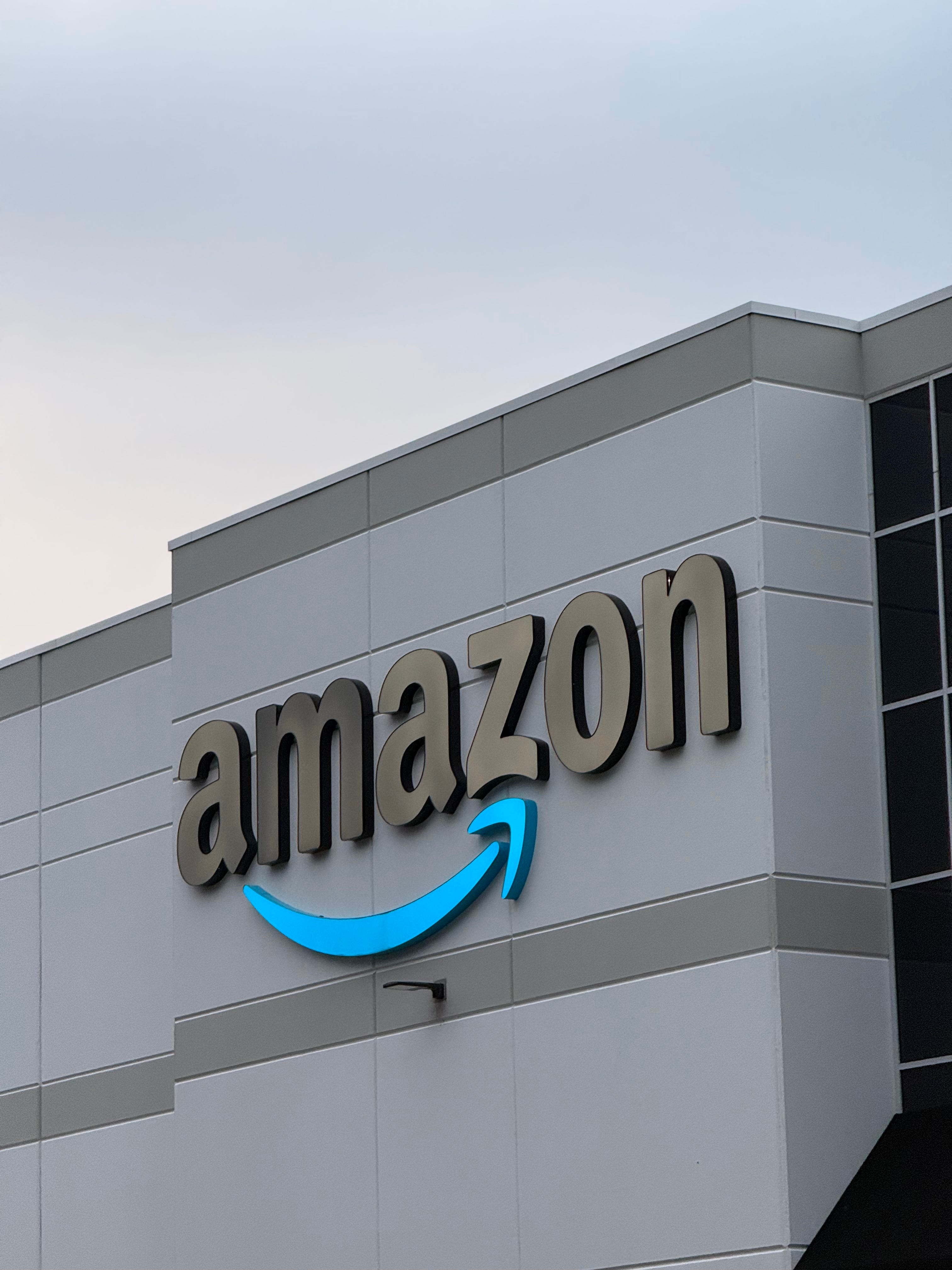
Amazon is an elaborate, interconnected group of contractors and employees, whom Amazon exclusively refers to as “associates.”
I did not like working at Amazon. There are many reasons why. One of two chief things, in retrospect, that got me about Amazon was the commute. Working at Amazon isn’t just working the hours you are scheduled for. It’s the time it takes to get to the warehouse, the time you’re waiting in line from one of the three shuttles that are supposed to come on time to designated parking spots, but rarely do. There are Uber shuttles and further examples of how Amazon, how every large company now I guess, outsources everything instead of bringing or keeping functions in house.
It wasn’t all negative. Working at Amazon was multicultural. You have so many different kinds of people—most joined together in a common attitude of not wanting to be there. Some seem happy to be there. The happiest are the ones who appear to have a sense of community. That was heartening.
The second thing that made me sad was the fact you are constantly reminded how much you are a number, a data point, in a huge and overwhelming structure. Everything, and everyone, had a QR code assigned to them. Spaces on the floor were designated their own codes. It was lowkey fascinating to see this machine of parts and people humming along. You felt as if you were on the ground floor of capitalism itself. It was futuristic, to be sure. More to the point, it was dystopian. I’m not sure that I liked the future it showed me.


There was also the fact that everything at Amazon was mediated through an app you had to install on your phone. This includes all human resources functions, like applying for new skills-based training, and all staffing concerns relating to things like scheduling and various opportunities for time off. Concentrating your entire interaction with the company into an app wasn’t as great and efficient an experience as management claimed. You missed out on things because you weren’t constantly checking your phone. And I think one of the things that makes me sad is to be so attached to my phone.
New job
All that in the rearview, I am pleased to say that I have found a new job with an income I can finally support myself on. I’m working on saving money and getting over the challenges I’ve faced in 2025.
This is part one of an indefinite series of articles about my life in 2025 and beyond. Whether there will be more updates specifically on or, God willing, actual chapters of, Eathel the Bastard, I cannot say.
Today I feel better than I have in the past. I attribute this to the fact I’m planning to publish something, anything, and put myself out there once again. I hope this feeling stays, but all moods are fleeting. I know that more now than ever.
A poll for the baddies
Whatever being a ‘content creator’ means.
Both of these for work.
I think I created my LinkedIn account around 2012. I think it has been my most enduring social media account.
You know, like “Jake from State Farm”? I even donned a red polo and dad-khakis to further the likeness.
At least, as it was ca. summer 2025.
A rational and honest retelling of a brutal year. By all accounts it will be increasingly brutal until we can set our country on a better path. I’m particularly interested in hearing about positive aspects of AI. Apparently it’s coming/here and I’m tired of being scared of everything
Thank you for writing this, and for being open and real and letting us put ourselves in your shoes and get to know and appreciate you as a human being, Sam. That takes courage and guts to do, and I appreciate your sincerity and straightforwardness. A lot of people feel like they have to put up facades and pretend they are someone they are not, so your sincerity is refreshing to see!